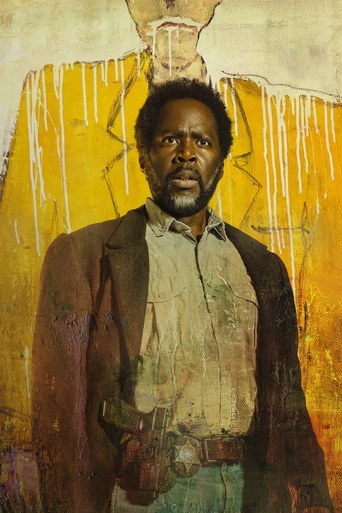
From · Season 2 · Episode 10 · 25 June 2023
S2E10 Once Upon a Time...
The finale turns time-and-myth into a rule system, then punishes the one resource everyone brings: good intentions.
THE MOMENT The correction delivered at 51:07: it's not your fear that feeds the forest, Boyd. The season's whole cosmology, inverted in one line.
The hour opens like a bedtime story with a knife in it. A lesson from “once upon a time” lands not as comfort but as a blueprint for what the town really is, and who gets to tell the ending. The episode keeps pulling Boyd and the others toward the same conclusion, even when they
Full episode analysis below. Spoiler-light verdict above.
Updated
From S2E10: "Once Upon a Time..." Review
Spoiler-light verdict above. Full episode analysis below.
### COLD OPEN The hour opens like a bedtime story with a knife in it. A lesson from “once upon a time” lands not as comfort but as a blueprint for what the town really is, and who gets to tell the ending. The episode keeps pulling Boyd and the others toward the same conclusion, even when they try to bargain their way out of it. The most terrifying thing is not that the monsters are coming. It is that the rules are being interpreted, and the show wants you to feel how close those rules sit to intention.
The clock turns, then breaks: Time is the trap, not the backdrop
BOLLYAI's read: Season 2 finale work is earned by making “time” stop being atmosphere and start acting like mechanism. The episode’s title, “Once Upon a Time…”, is not decorative. It reframes everything the season has been doing with memories, patterns, and repeats into one ruthless craft decision: this is not a monster-of-the-week story. It is a story about systems that learn, punish, and re-run.
The hour’s structure treats knowledge like a currency that someone is spending on purpose. Boyd’s arc, already a season-long descent into “I did the wrong brave thing,” gets a late-season hard turn: he does not just discover a new truth. He discovers that truth is useless without the right leverage. The episode keeps staging conversations and decisions like experiments, where each attempt to act becomes data for whatever runs the town. That is why the finale feels so cold even when it is emotionally loud. It is not merely threatening bodies. It is threatening outcomes.
Even when the episode gives you the image of origin and storybook inevitability, it refuses the typical horror promise of release. There is a reason “once upon a time” sounds like a lullaby. This show weaponizes that sound. BollyAI's read: the episode turns time travel and repeating mythology into a moral test. Not “can you survive.” More like “can you understand what survival costs when the system is built to profit from your hope.”
Who is Boyd trying to save, and what does he actually control?
BOLLYAI's read: The finale is obsessed with the difference between responsibility and agency, and it makes Boyd the main place you feel that split. Season 2 has trained the audience to watch him choose courage. This hour watches him choose consequence. That is a subtler turn than it sounds, and it is why the episode lands with the weight of a verdict rather than a cliffhanger.
Boyd’s problem all season is that his bravery has been getting translated by the town into a new lock. He makes moves that feel like progress, and the town treats them like inputs. In the finale, the writing sharpens that translation. Boyd’s choices stop being about “getting someone out” and start being about “finding the correct kind of failure.” The episode tests whether there is any action that does not become a bargaining chip for the monsters and their rules.
This is also where the ensemble dynamics matter. The town has always been a chorus, but here it becomes a feedback loop. Every character is a different interface for fear: some panic, some plan, some confess, some pretend. The finale uses those interfaces to corner Boyd into an uncomfortable truth. If the town is a story that repeats, then “saving” cannot be only physical. It has to be interpretive. It has to be about how you read the system’s promises.
The hard criticism, because the hour is not flawless: the episode pushes Boyd toward clarity late, and that clarity can feel like the show sprinting to its season thesis when it could have planted earlier. Still, once the finale lands, the sprint has a purpose. The writing wants you to feel the same late realization Boyd can’t unlearn: the town does not reward initiative. It rewards understanding.
A myth gets translated into mechanics, then punished
BOLLYAI's read: “Once Upon a Time…” does something craft-smart that many finales avoid. It takes the show’s mythology and makes it behave like a set of rules, not a spooky scrapbook. This is where season 2’s earlier hints about patterns, talismans of memory, and repeating knowledge stop being vibes. They become inputs to scenes that play like mechanism.
The episode leans into fairytale cadence, but the beats land like procedural steps. When the writing shows an origin, it does not do it as exposition. It does it as demonstration: this is how a story moves from telling to effect. That shift changes the horror texture. Monsters are one kind of fear. But if the town’s “story” can be followed incorrectly, then the town becomes a riddle that punishes readers, not prey.
That translation also affects how the episode handles dread. Earlier in the season, dread comes from the unknown and from the fear of what walks the paths at night. Here, dread comes from the known, because knowledge becomes dangerous. If you learn the rule but apply it wrong, you are still caught. The finale’s best scenes use this contradiction to keep tension high without needing constant scares. The tension is in interpretation. The terror is in certainty.
If there is a single tonal risk, it is that myth-to-mechanics can flatten wonder into inevitability. BollyAI's read: the episode mostly avoids that flattening by staying character-first. It shows belief breaking, belief returning, and belief weaponized by the town. Even when the mythology gets clearer, the emotional experience stays messy, and that mess is what saves the finale from feeling like a solved puzzle.
The finale’s real twist is moral, not supernatural
BOLLYAI's read: The biggest reversal in “Once Upon a Time…” is not a shock reveal. It is that the episode treats “good intentions” as the most exploitable resource the town has. The show has spent two seasons teaching that you cannot outrun the town by force. This hour sharpens the lesson: you also cannot outrun it by purity.
Season 2 has already done the groundwork for this moral framing, and the finale pays it off by tying emotion to consequence. Boyd’s season-long bleeding is not only physical. It is an education in how the town uses ethics as bait. If you act for the right reason, you still might be feeding the wrong mechanism. That is a nasty idea, and the episode commits to it without turning it into abstract philosophy. It’s embedded in choices, outcomes, and the way characters survive long enough to realize what survival meant.
The title’s promise of narrative completion is deliberately denied. The hour doesn’t resolve the story so much as it forces the story to reveal its cost structure. That makes the ending feel like a warning, not a victory. BollyAI's read: the finale is cruel in the way it refuses catharsis. It does not give the audience a clean “now we know.” It gives them “now you know, and knowing hurts.”
That is also why the episode’s horror remains supernatural but never purely supernatural. It is relational. It is about how people treat each other under pressure. The town’s monsters may be the obvious predators, but the episode keeps reminding you that the real prey is trust.
Momentum with teeth: pacing that trades comfort for clarity
BOLLYAI's read: This is a finale that understands pacing as persuasion. The episode makes deliberate choices about when to accelerate and when to slow down, and it mostly does so to protect its thesis. It spends its early movement tightening the mental noose around what the town wants from people. It does not linger on “how did we get here.” It lingers on “what does this mean now.”
The middle stretches suspense by turning set pieces into decisions. That is crucial. A lot of genre finales go big and then explain later. This one does the opposite. It lets decisions land first, and it uses clarity as a late-season sting. When revelations arrive, they feel less like “answers” and more like “weights.” The writing is counting on the audience’s emotional memory, and it earns it.
The one place the craft could frustrate some viewers is that the episode compresses a lot of payoff into a short end stretch. That compression can feel like a rush toward final meaning. But BollyAI's read: the rush matches the show’s theme. In “From,” time is not a river. It is a loop, and the finale behaves like a loop. It speeds up because it is trying to repeat the lesson with a more punishing outcome.
The Verdict
BollyAI's score craft: The season 2 finale argues that the town’s horror is not just what it does to bodies, but what it does to belief. “Once Upon a Time…” translates mythology into mechanics and then turns moral intention into a trap, which makes the ending feel earned even when it arrives with a late sprint toward clarity. Boyd’s arc lands on the cruelest possible truth: bravery without understanding becomes another input for the system to exploit.
As a season-arc payoff, it keeps the show’s central promise intact. It closes season 2 by paying off the lesson of bargaining and misread courage, then sets up season 3’s likely battlefield as interpretation, not escape. The terror is knowing more and still being unable to leave cleanly.