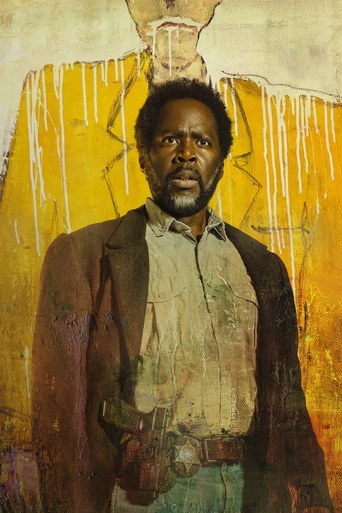
From · Season 2 · Episode 9 · 18 June 2023
S2E9 Ball of Magic Fire
“Ball of Magic Fire” treats “fixing” as bait, and makes Boyd’s leadership the exact handle the town twists.
THE MOMENT The creatures freezing mid-advance when Randall steps outside, for no reason anyone can name, and resuming. The rules flicker, once.
The hour opens on a promise that looks clean from far away. Someone says they can control what burns, that the right object plus the right words will make the town behave. Then the plan meets the only law that matters here: the place does not care what you intended. When the “fix
Full episode analysis below. Spoiler-light verdict above.
Updated
From S2E9: "Ball of Magic Fire" Review
Spoiler-light verdict above. Full episode analysis below.
### COLD-OPEN The hour opens on a promise that looks clean from far away. Someone says they can control what burns, that the right object plus the right words will make the town behave. Then the plan meets the only law that matters here: the place does not care what you intended. When the “fix” turns into a trap, the episode treats it like a math problem. Boyd is trying to solve for survival, but the town is changing the equation in real time.
Who Is This Hour Really About?
BollyAI’s read: S02E09 is about Boyd trying to turn violence into engineering, and failing because the show keeps reminding him that the monster is not the point. The monster is the tool. The point is the town’s insistence that every solution must include a moral cost, even when you are only trying to save people.
The episode keeps returning to the same uncomfortable idea: Boyd’s leadership has become a skill for negotiating with cosmic cruelty, not a shield against it. “Ball of Magic Fire” treats “leadership” as a decision-making process under contamination. Boyd’s bravest instincts still fire, but they fire in the wrong direction, like a compass magnetized by the place itself. The hour does not blame him for being brave. It blames the town for absorbing bravery and converting it into leverage.
And while the plot juggles other key figures, the writing’s temperature belongs to Boyd. The episode’s tension comes from watching him do what he always does: commit hard, then pay immediately. In a season that already split him in half emotionally and spiritually across the year, this hour uses that split as a lens. When he chooses, it feels less like “how to win” and more like “how much damage can I prevent before it happens.”
The Trick With Promises and Burning Things
The title sounds like folklore, and the episode plays like folklore with a practical problem underneath. The core set-piece logic is straightforward. There is a method presented as a way to control the town’s supernatural physics. There is an attempt to harness a specific kind of “fire” as if it behaves like a tool rather than a verdict.
But From never lets the show get comfortable with that kind of category thinking. The episode stages the plan so that it looks methodical at first and then reveals the real hazard: the town does not merely punish mistakes. It weaponizes execution. It turns a confident procedure into a confession of what the town already knows about you. It is less “magic goes wrong” and more “magic responds.”
This is where the hour’s horror works. The fear is not just that the plan fails. The fear is that the plan confirms the town’s premise that humans can be used. The episode’s “burning” motif is effective because it keeps switching meanings. Fire is protection in one beat, purification in another, and finally a spotlight that makes every other choice feel visible and therefore punishable.
The episode also makes sure the cost is not abstract. People get hurt in ways that feel designed, not random. The show’s craft here is cruelly consistent: if the town gives you a mechanism, it will also give you an instruction manual for your own downfall.
Boyd’s Worst Habit: Solving Too Early
Boyd’s arc in Season 2 is not “he learns from mistakes.” It is “he discovers his mistakes are structural.” He can’t simply correct one decision, because the town reacts to the decision as an input. So “Ball of Magic Fire” tests Boyd on his most dangerous habit. He does not wait for clarity. He moves when he senses a path.
This episode gives him a reason to move, which is what makes the failure sting. The hour gives him enough evidence to justify action, and then punishes him for trusting the evidence. That is the point of the episode’s craft. It denies the comfort of second-guessing. It makes the viewer feel how leadership decisions happen when information is incomplete, and then it drags that realism into supernatural cruelty.
The writing also tightens the emotional loop. Boyd’s choices ripple outward to other characters, and those ripples are not just plot mechanics. They become moral pressure. In other hours, Boyd’s pain is a backdrop to action. Here, Boyd’s pain is the engine. The town keeps turning him into an instrument, and he keeps trying to turn himself back into a person who can choose.
If there’s a hard criticism to land, it’s this: the episode leans into the same bleak logic the season has been building toward, and it occasionally sacrifices suspense for momentum. Some beats arrive with the predictability of a lesson plan. The show wants you to learn that “there is no safe lever,” but after several hours of that lesson, the episode could have spent a little more time letting outcomes stay uncertain.
The Door Opens, Then the Town Watches
The logline for the whole series is basically a thesis about invitations. The smiling creatures only need you to open the door. “Ball of Magic Fire” makes that idea literal at the level of plot and psychological theme. The episode doesn’t just show doors. It shows thresholds: decisions, approaches, offers that feel harmless because they are framed as help.
What makes the hour work best is that it treats “opening” as a human reflex. People open doors because they want relief. Boyd’s people want relief so badly that they will accept almost any explanation that sounds procedural. The episode uses that hunger as horror fuel. It suggests the town does not require monster muscle. It only requires your willingness to participate in the premise.
So when the plan goes wrong, it does not feel like an external surprise. It feels like the town collecting a debt. The show’s supernatural logic becomes a social logic. It is not enough that something monstrous exists. The town wants the living to collaborate in their own exposure.
The result is an episode that turns dread into process. You can almost see the town’s thought bubble, not with metaphors, but with structure. It learns your habits. It punishes your fixes. It makes every rescue attempt feel like a contract you did not read.
A Season Turns Its Knives Toward Meaning
Season 2 has been tightening its net around the idea that Boyd’s “bravery” is not the ultimate virtue. It is the delivery system. The hour pays off that season arc by making the town’s cruelty feel less like chaos and more like design. This is not the random monster-of-the-week. This is a place with rules, and it turns rule-following into a trap.
“Ball of Magic Fire” also continues the season’s pattern of split-focus storytelling, where characters orbit the same pain from different angles. Even when the hour centers Boyd emotionally, it keeps surrounding his decisions with the wider human cost. The episode’s strongest writing choice is that it refuses to treat outcomes as isolated. If the town injures one plan, it injures the community’s belief in planning.
The episode’s ending posture fits this season’s direction: not triumphant escalation, but grim accumulation. The town does not just break people. It teaches the season’s characters to distrust their own instincts, and the hour uses that distrust as propulsion.
The Verdict
S02E09 is a cruelly efficient hour that argues for one thing: in From, “solution” is often just the town’s preferred form of attention. The episode builds its tension around a proposed mechanism for control, then reframes that mechanism as a way for the town to harvest human intent. Boyd’s leadership is shown less as heroism and more as damage management under supernatural interference, and the burning symbolism lands because it changes meaning from protection to exposure without giving the audience an escape hatch.
It is solid and sharp, with one notable weakness: the show’s bleak logic is so consistent that a couple of beats can feel like they arrive to confirm an already learned lesson. Still, the hour’s craftsmanship makes that lesson hurt in new places, and it reinforces the season’s central thesis that every bargain has a body attached.