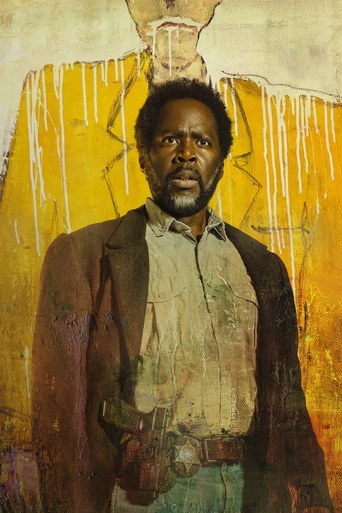
From · Season 2 · Episode 8 · 11 June 2023
S2E8 Forest for the Trees
The episode turns the experiment’s cruelty into a knowledge-pressure machine, and it pays off most strongly in Victor’s collapse.
THE MOMENT Victor handing Julie a portrait so she can remember him if something happens, an act of love that contradicts his entire survival strategy.
Victor's episode, and the season's saddest hour. The man who remembers everything reveals his amnesia was a choice: I put them somewhere so I would never have to remember, a trunk of childhood drawings hidden so that no one else would die. His three-word verdict on people who go looking for answers, because they don't come back, is the show's...
Full episode analysis below. Spoiler-light verdict above.
Updated
From S02E08: "Forest for the Trees" Review
Spoiler-light verdict above. Full episode analysis below.
A child asks what the other is drawing, and the answer is simple enough to sound like comfort. Then the episode turns that motif into a threat. Images that “remember” become evidence, confession becomes procedure, and every quiet beat feels like the show holding its breath before it tightens the experiment’s grip.
The experiment’s thesis is cruelty with a stopwatch
The hour opens by anchoring the theme in small line-work: one child asks, “What are you drawing?” and gets told, “Things I’ve seen.” It is more than a cute motif. It becomes a writing tool for dread because the show treats memory as something people can trade, hide, or force out of you.
That logic snaps into focus when someone admits they killed one of the experiment subjects. It is the first explicit act of violence, and it reframes the experiment from bad things happening to bad things being directed. The episode spells out the premise with unusual clarity: “how far you can push someone before they break.” The violence stops reading like background noise. It is the method. Once that lands, the later arguments about accident and intent stop sounding moral and start sounding procedural.
Donna gives the thesis a command structure. The contradiction map flags her as wanting control over the experiment while ordering violent actions like killing a subject. That tension is the point. The show keeps her in the role of someone trying to orchestrate chaos because the experiment needs supervision as much as harm. It needs a leash. It needs a bruise.
What works here is the bluntness. The episode does not spend time pretending this system is ambiguous once the premise is spoken aloud. It lets the ugliness stand. That choice sharpens the rest of the hour because every later conversation inherits that definition. Pressure is no longer metaphor. It is policy.
Intent replaces accident, and the room starts to feel smaller
The episode keeps tightening its claim. A character insists the recent events are not an accident and that they need more information. That shift matters because it changes what truth means this season. The question is no longer only whether something happened. It is why it happened, and who is steering the push toward breaking.
That is why the dialogue fights land harder here. The show stages a conflict over hidden knowledge and control when Jade demands Victor tell them everything about the tunnel symbol. The resistance comes in the language of boundaries, not mercy. Jade’s pressure is framed as entitlement to answers, and her impatience plays less like shrillness than a refusal to let other people control the narrative.
Her internal contradiction map helps. She wants the truth about the tunnel symbol and pushes others to reveal it. In this episode, that impulse is one of the few stable forces in a world that keeps converting uncertainty into damage. Jade becomes the clearest expression of the season’s belief that information is survival, even while everyone around her treats knowledge as leverage.
The rhythm sells the menace. The episode alternates dense bursts of dialogue with two long silences, letting the air thin during these experiment discussions. The silences do not relax the hour. They make it feel more controlled. More measured. The show trains you to feel how long a plan can sit in a room before it turns into a decision.
That rhythm also keeps the episode from flattening into exposition. There is a lot of explanation here, and a weaker hour would have let the language do all the work. Instead, the pauses make every spoken idea feel tested. Characters are not exchanging clues in a puzzle box. They are deciding how much damage they can live with to get the next answer.
The symbol gets interrogated like a locked room
The tunnel symbol is the episode’s central question made physical. Jade’s demand for everything Victor knows is not side business. It is the hour’s main drive toward explanation. The show makes this feel like the worst kind of discovery. Meaning comes through pressure, resistance, and the implied cost of getting it wrong.
That choice matters because it changes how the symbol functions. It is not just lore. It becomes a site of conflict. Every attempt to decode it carries the sense that understanding will force action, and that action may hurt somebody. The episode treats interpretation as a dangerous act.
This is where the second half’s dread concentrates. The episode gives a dream image tied to a signal, then reintroduces silence long enough for the unease to settle. A character recounts hearing the same buzzing phone tone in a dream. It is a small supernatural beat, but it works as a clue that refuses clean categorization. The buzzing does not solve anything. It creates a new pattern-recognition panic.
In craft terms, the symbol scenes are built to linger. After the earlier arguments, the hour moves into extended quiet, and the dread sits there instead of spiking. That restraint fits the season’s obsession with messages, routes, and hidden rules. The episode plants an open loop it can keep feeding later: what the symbol on the tunnel walls actually means. It is framed as a translation problem, but the show keeps reminding you that translation changes behavior. Sometimes violently.
That last part is the episode’s smartest move. It understands that a mystery does not stay abstract once people begin acting on partial readings. A symbol is still a weapon if everybody is desperate enough. “Forest for the Trees” keeps that desperation close to the surface, which is why the symbol material feels tense instead of dutiful.
Victor cannot be brave, and that becomes the episode’s emotional argument
If the episode has a contradiction that hits hardest, it is Victor. He wants to be brave for his sister but repeatedly freezes and cries, refusing to leave. The beat arrives plainly when Victor’s mother cries, “I love you,” as he resists leaving. This is not just a family moment. It is the emotional counterweight to everything else in the hour.
Up to this point, the episode pushes information through force and procedure: experiments, admissions, insistence, interrogation. Victor is the person whose body rejects that script. He wants to act, but fear locks him down. His contradiction is not an abstract flaw. It is proof that the world’s pressures are working, even when the episode seems preoccupied with symbols and signals.
His pattern of freezing and crying fits the larger thesis. If Donna’s world is about pushing someone until they break, Victor is where that break becomes visible in emotional terms. The show lets him resist, but resistance does not read as triumph. It reads as paralysis. That is why the scene hurts. It looks like love trying to become courage and failing in real time.
The episode’s rhythm supports this turn. Dialogue bursts keep dragging the plot toward decisions, then long silences let dread settle into character. When Victor is given room to freeze, the quiet makes his refusal to leave feel less like delay and more like a wound reopening.
This is also where the hour’s analysis of knowledge gains a human cost. Victor knows things. Other people want those things. The season has built pressure around extraction, around who gets to demand answers and what those demands do to the person being pressed. Victor turns that pressure inward. He is not simply the keeper of clues. He is the evidence that survival under constant coercion deforms the self long before it kills the body.
It helps that the episode does not overplay the scene. There is no need to gild it. Fear is enough. The mother’s plea and Victor’s inability to move give the hour its clearest emotional shape, and that shape throws the rest of the episode into relief. Every theory, every interrogation, every push for clarity runs into one hard fact: people do not process terror on schedule.
The Verdict
“Forest for the Trees” argues that survival in this season is not yet about escaping the town. It is about forcing meaning out of cruelty, then watching what that extraction does to people. The episode states the experiment’s premise with clarity, then spends the hour testing whether knowledge can stay clean once violence becomes procedure. Donna’s control instincts and willingness to kill a subject make intent feel engineered. Jade’s tunnel-symbol obsession keeps the season’s central mystery alive, but the show does not pretend answers will restore anyone. The emotional payoff comes with Victor. His freezing and cries turn the episode’s logic into human cost. BollyAI’s read: the hour is strongest when it turns information pressure into character damage, and weakest when the dream-buzz clue risks feeling like another tease instead of progress.