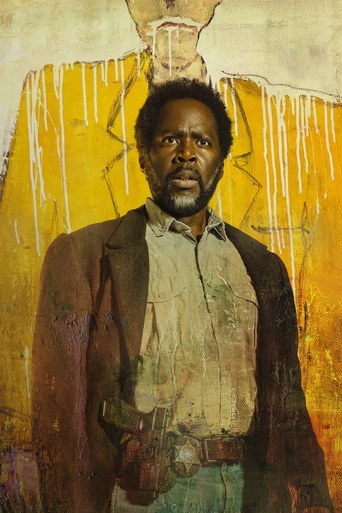
From · Season 3 · Episode 1 · 22 September 2024
S3E1 Shatter
“Shatter” makes confession feel like a weapon, not comfort, and turns survival rules into a trap the hour is ready to expose.
THE MOMENT Jade crouched at a wall, repeating that he cannot see the thing he is supposed to see. Whatever the place wants from him, it has stopped asking politely.
A road sign turns into another road sign, and the town treats it like nothing. People keep driving anyway. When the daylight finally settles, it reveals what the night has been doing off-screen. The community gathers, not to solve the problem, but to agree on a rule for surviving
Full episode analysis below. Spoiler-light verdict above.
Updated
From S3E1: "Shatter" Review
Spoiler-light verdict above. Full episode analysis below.
### COLD OPEN A road sign turns into another road sign, and the town treats it like nothing. People keep driving anyway. When the daylight finally settles, it reveals what the night has been doing off-screen. The community gathers, not to solve the problem, but to agree on a rule for surviving the next ten minutes. And then the hour cracks its own premise by making “staying inside” feel like the dangerous choice.
BollyAI’s read: “Shatter” opens Season 3 by breaking the audience’s comfort with rules. It replaces “we know how to live here” with “we only learned enough to be wrong.”
Who Is This Hour Really About?
“Shatter” is less interested in a single protagonist than in the moment a town decides what it is willing to admit. This season has been building toward confession as a language. The episode’s earliest conversations already feel like rehearsals for a bigger truth: that everyone in town has been bargaining with something they refuse to name.
Donna becomes the episode’s emotional math. Her presence is not just “someone who cares.” It is “someone who has already been paying the cost for caring,” and that cost is grief wearing a practical face. The armor line is the clearest thesis in the early half, because it reframes her competence as a coping mechanism rather than a personality trait. When an episode starts with a protective myth and ends up undercutting it, you feel the title’s logic. Things do not fall apart because the threat is stronger. They fall apart because the story you told yourself stops holding.
Victor acts like the structural conscience, not by lecturing, but by refusing to speak the sentence the town needs most. He keeps information in his body rather than offering it to the room. That makes “Shatter” feel like a mystery even while it’s doing character work. The hour’s suspense is not “what is in the woods.” It is “what will happen when Victor finally stops translating his fear into silence.”
BollyAI’s read: This episode is about withholding. It dramatizes the terror of a truth that can only be spoken when someone is ready to break.
Pacing as a Weapon
The craft trick of “Shatter” is that it gives you motion without giving you resolution. The hour is busy in the way horror thrives on. People move rooms. People swap roles. Plans start to form and then get interrupted by new information, which means the episode keeps tightening the screws without ever feeling like filler.
The most important pacing choice is the distribution of “pressure.” The first part of the episode leans into routine danger. The later part leans into consequences. That order matters. If the hour pays you the emotional turn first, it risks flattening the fear into a catharsis beat. By delaying the bigger admissions, “Shatter” makes the eventual cracks feel like a response to accumulated strain rather than an authorial jump.
Where the pacing gets sharper is in how it uses community scenes. Instead of treating group talk as setup, the episode treats it like triage. The dialogue doesn’t just inform. It tests who can handle knowing. If someone says the wrong thing, the room doesn’t argue politely. The room fractures, and the fracture becomes the scene’s real horror.
There is a specific risk in this approach: if the episode leans too hard on talk without landing physical change, the “shatter” metaphor becomes thematic wallpaper. “Shatter” avoids that by making even static moments active. A conversation changes the next action. A denial changes the next plan. The hour keeps turning speech into threat.
BollyAI’s read: The episode’s pace is designed to imitate cracking. It accelerates toward admissions the same way glass accelerates toward impact.
The Town’s Rulebook Stops Being Faith
“From” works when it treats the town like a living system with its own habits. “Shatter” leans into that, but with an important twist. The hour doesn’t just show the town breaking people. It shows the town breaking assumptions about how survival works.
In the episode’s world logic, safety has always been procedural. Locks, watch rotations, routines. The horror comes from the fact that procedures are not enough. Season 3, however, raises the craft stakes by asking: what if the procedures are part of the trap? “Shatter” makes “staying inside” feel like compliance, and compliance feels like an invitation.
That’s where the forest presence becomes more than atmosphere. It is not simply “a scary place outside.” It is a pressure field that shapes behavior. The episode’s tension comes from watching people react to a threat they cannot reliably map. You can’t memorize the danger if the danger is also reacting to you.
BollyAI’s read: This hour shifts the suspense from location-based fear to choice-based dread. The doors are not just physical. They are moral.
Tender, Then Merciless
The episode’s emotional contrast is its sharpest weapon. “Shatter” gives tenderness just long enough to make the next cruelty land. That balance is hard because horror dramas often do one of two lazy things: either they stay cold and never risk feeling, or they overindulge feeling and blunt the horror’s edge.
Here, the show does something more disciplined. When the episode is tender, it is precise. It ties tenderness to a specific confession, a specific admission of motive. When the episode is merciless, it is not random. It follows the confession with a consequence that exposes the lie behind it.
Donna is again the best example. The episode doesn’t treat her grief as melodrama. It treats it as an engine that shaped every defensive habit she built. That makes her tenderness earned. And when the hour turns, it does so by reminding the audience that grief does not stay private here. In a town that already feeds on opening doors, the act of finally letting something out can be the most dangerous door of all.
Victor adds the same pattern from a different angle. His hesitation reads like protection, but the episode implies protection can be avoidance. And avoidance, in this place, is never neutral. It costs time, it costs trust, and eventually it costs lives.
BollyAI’s read: “Shatter” is merciful because it lets characters be honest, and merciless because honesty triggers the town’s response.
The Show Breaks Its Own Rule
There is one structural reversal that defines the hour’s identity. “From” tends to keep its answers at arm’s length. Mysteries are real, but the show often withholds explanations long enough that the town’s cruelty becomes the only language that matters.
“Shatter” breaks that rhythm by foregrounding what the show has refused to say for a while. Not in the form of a clean solution. More like the first movement of a sentence finally reaching the air.
This is where the title becomes literal. Shatter is not a single shattering moment. It’s the gradual failure of a protective surface. “Shatter” uses its opening act to show the surface still exists, then uses its ending energy to prove it has already started failing. That is a craft way of telling viewers the show is changing its method, not just its threats.
It also reframes the season’s promise. The logline for this season has been about paying off what was hoarded, about dialogue built on confession. “Shatter” doesn’t deliver the full season payoff in Episode 1. It does something trickier. It builds the conditions where payoff becomes possible.
BollyAI’s read: The hour’s real accomplishment is this. It makes the “mystery” feel like it can now be spoken, which turns horror into consequence instead of only atmosphere.
The Verdict
“Shatter” is a strong start because it understands what a horror mystery sequel must do. It cannot merely add new scares. It has to rearrange trust. This episode does that by treating confession as both emotional relief and tactical risk. The writing turns routine survival into a question, and it uses pacing to imitate cracking instead of rushing to answers.
The episode’s one weakness, if it has one, is that it leans heavily on social and psychological pressure before it fully converts that pressure into fresh, external escalation. But that tradeoff pays off in how cleanly it sets Season 3’s emotional logic: the town does not just punish you for running. It punishes you for believing the story that lets you stay still.
Season-arc sentence: By ending on the promise of finally naming what’s been kept unsaid, “Shatter” positions Season 3 as the season where dialogue becomes action, and action becomes irreversible.