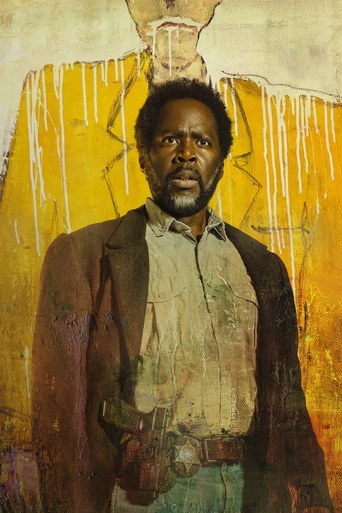
From · Season 3 · Episode 2 · 29 September 2024
S3E2 When We Go
“When We Go” makes escape a character test, using confession and loop logic to turn hope into leverage and dread.
THE MOMENT Boyd's account of the barn: she looked at me, and she did not take her eyes off me. What the creatures wanted him to carry, described exactly.
The episode opens in the town’s worst kind of quiet. People move like they are listening for a sound that never quite arrives. Someone tries to set a normal rhythm, and the hour refuses to let it stick. A decision gets made fast, then questioned even faster. By the time “escape”
Full episode analysis below. Spoiler-light verdict above.
Updated
From S3E2: "When We Go" Review
Spoiler-light verdict above. Full episode analysis below.
### COLD-OPEN The episode opens in the town’s worst kind of quiet. People move like they are listening for a sound that never quite arrives. Someone tries to set a normal rhythm, and the hour refuses to let it stick. A decision gets made fast, then questioned even faster. By the time “escape” becomes a word you can actually hear in conversation, the show has already done the one thing it always does when it wants to hurt you. It shows you the door first. It makes you believe opening it is the same thing as surviving.
Who Is This Hour Really About?
BollyAI’s read: “When We Go” uses the town’s loop logic not as a gimmick, but as a character sieve. The hour separates people into two types: those who can still act when certainty is impossible, and those who can only act once they are allowed to be afraid in public. This is less “monster-of-the-week” and more a pressure test for the people doing the living, the people doing the managing, and the people doing the bargaining with hope.
The episode’s emotional engine is confession, consistent with the way Season 3 shifts the show’s writing from accumulation to payment. In a town where every road returns, the show turns inward. It asks what it means to stay when movement is fake. It gives the major character set a single shared constraint. Everyone wants something that the town controls. Some try to negotiate with rituals and rules. Others negotiate with each other, which is more dangerous because it invites honesty.
And honesty is what the episode weaponizes. It does not let characters use trauma as a shield. It makes them use trauma as a compass, and then points the needle toward consequences. The “who is this hour about” answer is not one person. It is the town’s leadership structure, the way authority forms, and the way fear edits what people think they mean when they speak.
A Door That Feels Like a Trap
The clearest thesis beat is how the hour treats exit as a temptation with a maintenance schedule. “When We Go” frames the door as both promise and punishment, and it keeps switching which role it plays. The show’s mythology has always loved symbols that look straightforward and behave cruelly, but this episode leans harder into the practical horror of it. Not “what is out there,” but “what are you doing with the belief you can change the outcome.”
A major strength of this installment is its refusal to let escape be purely external. The town has trained everyone to believe survival is a procedure. Step A, then Step B, then you earn another night. When the hour introduces or amplifies a route toward leaving, it also shows what that desire erases. It erases patience. It erases nuance. It erases the social scaffolding that keeps people from breaking each other.
So the door becomes a litmus test for character intent. Who wants freedom. Who wants certainty. Who wants control. Even when the episode does not say it out loud, it implies it in its staging choices. People lean in toward the idea of an exit as if proximity equals permission. The show punishes that mental shortcut, and it does it with the kind of restraint that makes the horror feel administrative.
Where it earns maximum dread is in the timing. The hour withholds the full answer long enough for characters to commit to a story they want to be true. Then it turns the sentence the story is built on into evidence against them. That is the cruelty of the door: it rewards the desire to open it by letting you open it, and then it takes away what opening was supposed to grant.
The Town Uses Time Like a Question
Season 3 has been tightening the mystery into something more like a mechanism than a fog bank. This episode deepens that move by treating time as dialogue. The loop logic is not only about geography. It is about repetition as a form of interrogation. The hour keeps returning to the same emotional problem under slightly different lighting. That is craft, not filler. It makes the town feel like it is speaking through recurrence.
The writing also makes a specific promise and then keeps it. “When We Go” keeps characters in motion even when they are not moving. Conversations start with one goal and drift into another as fear rewrites meaning. A plan becomes an argument. An argument becomes a confession. A confession becomes a new plan that is worse because it is more intimate.
The net effect is that the episode makes the central question harder to dodge: what does it mean to “go” when “go” has been engineered to return you to yourself? If leaving is impossible, then the only real escape left is emotional and social. That is why the show keeps choosing moments that feel like turning points but behave like traps. The episode wants you to feel the illusion of progress. Then it shows you the cost of believing in progress.
If there is a criticism to land, it is this: some of the hour’s momentum can feel like it is racing toward a payoff even as it is still laying down foundations. The structure is strong, but the suspense is sometimes earned through delay rather than revelation. Still, the episode’s thematic consistency prevents that delay from becoming empty. It delays to make the return sting more.
Confession as Armor, Armor as Grief
The season’s broader theme has been confession as craft. Here, the show sharpens it into a specific weapon. “When We Go” treats grief as the real armor, not as a metaphor. Characters speak as if they are trying to solve a riddle, but what they actually do is admit the truth they have been spending years controlling.
In the context of Season 3, that matters because the writing is changing how it distributes power. Earlier seasons hoarded explanations. This one pays them out through character consequences. The episode leans into that approach by letting confession create immediate instability. It does not soothe. It destabilizes. It turns private pain into shared risk.
The major character beats in this hour emphasize that no one gets to keep their version of events untouched. The town does not just punish actions. It punishes the stories people use to justify those actions. Once a character admits what their fear has been covering, the town can rearrange the outcome because the lie is gone. The show’s horror is not only external. It is the collapse of self-deception.
This is also where the episode’s dialogue style pays dividends. The conversations feel like they are being constructed in real time, with each line carrying the weight of what it will allow later. The show makes talk behave like fate. You can hear the episode deciding what kind of truth each character is ready to pay for.
The Season Pays Its Debts in Small, Sharp Cuts
BollyAI’s read: This installment functions as a hinge inside Season 3’s shift from mystery hoarding to mystery paying. It does not drop the biggest mythology bomb in the way a season premiere might. Instead, it rearranges relationships and internal logic so that later answers land with impact. It is the kind of hour that makes subsequent scenes feel inevitable, because it trains the viewer to expect that emotion will be the mechanism.
The episode also supports the season arc around leadership and responsibility in a practical way. The town survives through roles. “When We Go” tests what happens when roles meet truth. It forces characters to confront that authority in From is not comfort. It is exposure. When the hour turns confession into leverage, it means the next time someone makes a call, their motives can be read in hindsight.
The best part is the restraint in the verdict it implies. The town does not guarantee justice. It guarantees consequence. That is the difference between a mystery and a trap. A mystery answers. A trap teaches you the shape of your own weakness.
The Verdict
BollyAI’s score logic: “When We Go” is a tight, character-driven tightening of the Season 3 machine. The episode argues that escape is less a destination than a test of intent, and it proves it by staging the desire to leave as a kind of emotional shortcut that the town punishes. Confession is used as propulsion, not decoration, and the writing makes dialogue feel like an action.
The craft win is how the hour turns loop logic into interrogation: time repeats, meaning shifts, and people reveal the version of themselves they have been hiding. Where it stumbles, it is only in pacing density. A couple suspense beats land a little early, but they do not derail the thesis.
One season-arc sentence: this hour continues Season 3’s pivot toward paying character truths back into the mythology, so later answers feel earned rather than announced.
VERDICT_JSON: {"score": null, "one_liner": "“When We Go” makes escape a character test, using confession and loop logic to turn hope into leverage and dread."}