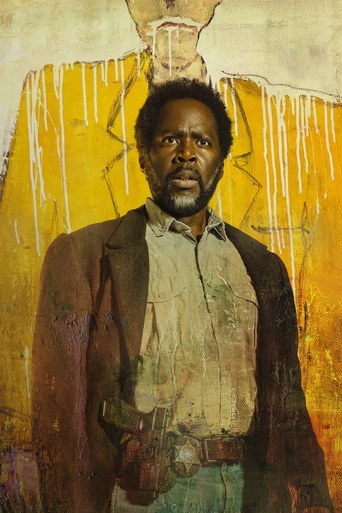
From · Season 3 · Episode 3 · 6 October 2024
S3E3 Mouse Trap
“Mouse Trap” treats clever plans as openings, then proves the town edits your intent faster than you can react.
THE MOMENT An ancient talisman ring at the lake settlement, evidence that someone fought this fight long before the town's current tenants, and lost.
A man wakes with a plan and zero proof. He has spent enough nights inside the town to understand its rhythm, so he tries to break it with something small, contained, and “clever.” He sets the trap in a place that should stay quiet. Then the town answers like it always does, not w
Full episode analysis below. Spoiler-light verdict above.
Updated
COLD-OPEN
A man wakes with a plan and zero proof. He has spent enough nights inside the town to understand its rhythm, so he tries to break it with something small, contained, and “clever.” He sets the trap in a place that should stay quiet. Then the town answers like it always does, not with a monster’s roar but with a reroute in the mind. The room feels designed, not haunted. BollyAI’s read: the episode treats paranoia like engineering, and it works.
spoiler_free
This hour sharpens the show’s favorite trick by making the characters build a “solution” that immediately turns into evidence. The episode’s first half is about control, the second half about what happens when control is a lie the town learned from you. BollyAI's read: “Mouse Trap” is tense and efficient, but it relies on the same pattern From uses elsewhere this season. The best moments come from character admissions. The weakest moments are when the plot asks you to accept the town’s timing without earning every second.
review_body
### THESIS: The hour weaponizes smallness, then punishes anyone who mistakes clever for safe “Mouse Trap” argues that the town does not just kill people. It corrupts the thinking patterns people bring in. The episode keeps its threats intimate and local, like a hand tightening around a wrist. A “plan” forms, movement becomes bait, and the trap is less about capturing a creature than capturing an assumption. When the characters act like they can outsmart the place, the writing shows how From’s cruelty is administrative. It processes intent, then redirects consequences.
### ## A Plan Built Like a Confession The cleanest way to describe this episode is as a confession disguised as logistics. Donna is the season’s moral equipment, the one who can’t stop scanning for what grief does to procedure. Here, her decisions feel less like leadership and more like damage control. The episode frames her as someone who believes the town can be managed, even while she knows it has teeth. That contradiction is the spark.
Victor is where the hour gets its bite. When he engages with “memory” instead of “hope,” the town’s loop becomes something he can feel rather than merely survive. Victor’s presence keeps the episode from turning into pure game logic. The hour understands that being clever is not the same as being right, and Victor is the character who learned that the hard way.
And then Jade and Jim (depending on how their threads intersect in the episode’s middle beats) function as the show’s two common failure modes. One chases meaning. The other chases action. “Mouse Trap” puts both approaches under the same harsh light: the town does not care whether you are philosophical or practical. It cares whether you can be predicted.
BollyAI’s read: the episode’s best writing move is making “planning” feel emotionally expensive. It is not just strategy. It is exposure. The more the characters try to control outcomes, the more the show forces them to admit what they actually want.
### ## Life Stage One: The Trap Pretends to Be Mechanical “Mouse Trap” is a title that works because it plays fair at first. The episode starts with a set-up that feels like a puzzle. A specific action happens in a specific place. A character tests a theory. The tension is built from the audience’s hope that the theory is worth something.
This is where the show’s horror mechanics get sly. From usually sells dread through scale, but here it sells dread through precision. The trap is “small” enough that the writing can focus on gestures, not set pieces. It treats timing like a predator.
Elgin (or whoever in the ensemble is positioned as the most willing to experiment in this hour’s structure) becomes a useful lens for that. The episode trusts the audience to recognize when a person is trying to win instead of trying to learn. That is a subtle but important distinction in From, because learning requires humility, and humility is the one thing the town punishes.
The episode’s emotional math also matters. When the town responds to a plan, it does not merely break the plan. It exposes why the plan existed in the first place. BollyAI’s read: the writing is at its sharpest when it turns “mechanical” into “psychological,” because then the terror is not the monster. The terror is the mirror.
### ## Who Is This Hour Really For? If you feel the episode tilting toward a particular character, you’re not wrong. “Mouse Trap” is organized around a question that hangs over Season 3: when do you stop treating this place like an external enemy and start treating it like a relationship that has rules?
Tabitha is the character through whom the show usually frames “rules.” She thinks in cause and effect, and she is often the one who looks at the map of wrongness. When she is present in the hour’s decisions, the writing tends to reward her for being observant, then punish her for being too sure that observation guarantees agency.
Ethan (if included as a thread in the “trap” beat structure this hour) is how the episode reminds you that the stakes are not only survival. They are development. From never lets its children just be innocent. It makes them witnesses first, then victims of whatever adults are trying to solve.
Meanwhile Jim becomes the episode’s emotional pressure test. He is the kind of person who can handle violence as a concept, but not guilt as a feeling. That mismatch is where the hour finds friction. The writing uses him to show that the town’s cruelty thrives in the gap between intention and consequence.
BollyAI’s read: the episode is “really for” the audience question of trust. Who should you trust in a town that makes you responsible for your own trap?
### ## The Town’s Cruelty Is Administrative From is often described as supernatural horror, but its scariest talent is bureaucratic. It makes rules feel inevitable. “Mouse Trap” leans into that by turning the episode’s central beat into a kind of paperwork for fate. You do X. The town does Y. Y was always waiting behind X.
This is where the episode’s pacing becomes its weapon. The middle does not linger on fear. It lingers on procedure, then cuts to the moment procedure fails. That creates a specific kind of dread: not panic, but the cold recognition that you are following a script you did not write.
BollyAI’s honest criticism: the episode sometimes asks for trust in the town’s timing more than it earns trust through character logic. When the trap snaps shut, the writing is effective, but a couple of beats feel like “the show wants the outcome now,” not “the show required the outcome.” Those moments briefly thin the suspense. They do not derail the episode, but they cost it a little of the crispness it earns elsewhere.
Still, the hour makes up for it by tightening what matters. The emotional payoff lands when a character realizes the town did not just catch them. It taught them how to catch themselves.
### ## The Door Philosophy: Clever Plans Still Need Permission The series’ central myth is the door. Not the literal door only. The concept. In From, “opening” is an act with metaphysical consequences, and Season 3 has been increasingly about who grants that permission inside a person.
“Mouse Trap” treats cleverness as another form of opening. A character tries to enter a safe thought, a safe solution, a safe understanding of the town’s logic. The episode answers by turning that mental door into a vulnerability.
Donna and Victor anchor the theme because they represent two versions of “permission.” Donna wants to believe she can decide what happens. Victor knows the town decides, but he also believes in stories as a way to negotiate with what cannot be negotiated with.
If the hour includes the season’s bigger emotional pivot of confession, it lands here: the town does not just punish secrecy. It punishes the attempt to stay in control while pretending you are not afraid. BollyAI’s read: the episode’s final movement earns its title because it shows the trap is not sprung by the town alone. It is sprung by a character’s need to be the smarter party.
The Verdict
“Mouse Trap” is a compact horror-thriller episode that uses small engineering to deliver big psychological harm. The writing’s strongest move is turning planning into confession, so the terror is not only what the town does, but what it forces characters to reveal. Season 3’s arc theme of paying for earlier hoarding fits this hour because the episode refuses to let anyone enjoy a “clever win.” Even when the trap seems mechanical, it is really relational, the town teaching people how their minds become entrances. BollyAI’s read: the episode is tense and sharply staged, with only minor pacing shortcuts where the plot demands timing over earned suspense. It moves the season forward while deepening the central question of agency.