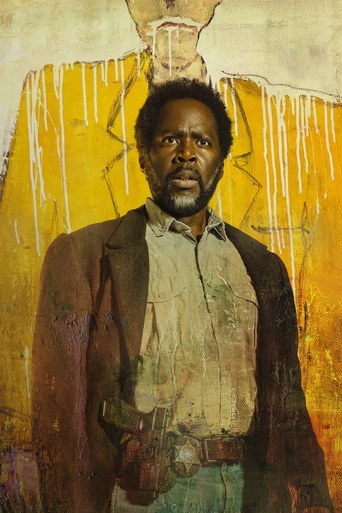
From · Season 4 · Episode 2 · 26 April 2026
S4E2 Fray
“Fray” turns information into a trap, and it proves the town’s real power is breaking trust before it breaks bodies.
THE MOMENT The instruction at 51:27, delivered from somewhere no instruction should come from: it's here, and I need you to find it.
A signal cuts through the radio static like a hook finding cloth. It is not a friendly voice. It is a simple instruction delivered with the calm of someone who has already tested the rules. In the same breath, the town answers back with a small, awful sign that the place is liste
Full episode analysis below. Spoiler-light verdict above.
Updated
COLD-OPEN
A signal cuts through the radio static like a hook finding cloth. It is not a friendly voice. It is a simple instruction delivered with the calm of someone who has already tested the rules. In the same breath, the town answers back with a small, awful sign that the place is listening. By the time the group understands what “coming undone” looks like here, the episode has already chosen its method. Fray is not about a monster breaking loose. It is about people misreading the fabric of the loop until the loop misreads them.
THESIS
“Fray” argues for a specific kind of horror: the town does not just trap bodies. It disrupts decision-making. This episode tightens From’s central machinery by making failure feel systemic, not accidental.
The map starts lying, not the roads
The episode opens with the kind of clarity that looks like safety. A direct signal. A straightforward directive. A sense that there is a way to act with fewer guesses. Then “Fray” quietly punishes the temptation to treat information as trust.
From always plays games with “what’s real” by making the environment act like a character. Here, the environment’s job is psychological. The loop is still the loop, but the episode focuses on how easily people translate partial signals into confident plans. They do not just walk into danger. They build a plan that assumes the town is stable, and the town rewards that assumption for exactly as long as it takes to make it catastrophic.
BollyAI’s read: the title “Fray” fits because the writing treats certainty like thread. Pull it, and the whole garment loosens. The horror is that the group’s reasoning does not collapse in one dramatic moment. It frays in increments. An answer that should reassure turns into a question mark. A choice that should be small becomes irreversible because everyone agreed on the wrong premise.
Victor’s history stops being background noise
Victor is usually a grounding device for the show’s mythology, the person whose memory has the shape of a warning. In this hour, his role feels sharper. Not because the episode finally hands over a full explanation, but because it forces the present-day group to relate to his knowledge in a new way.
The key is that Victor’s past is not served as lore. It is treated as an operational tool. That matters, because it changes the emotional math. When the characters regard his history as trivia, they can ignore it. When they need it to interpret a new phenomenon, they either listen or they fail. And “Fray” keeps testing that listening.
This is where the episode earns some of its bite. Victor’s presence becomes less “seasoning” and more “weapon.” He does not merely tell what happened. He changes what the group thinks is possible, and the episode makes the consequences land on those who refuse to adjust their expectations.
The radio becomes a trapdoor, not a lifeline
A signal sounds like rescue in any survival story. From weaponizes that familiarity. In “Fray,” the radio is not just a communication device. It is an accusation. The town is able to deliver meaning, and the horror is that meaning can be counterfeit.
The writing leans into a specific dread: if the town can speak in a way that mimics guidance, then guidance loses its moral status. You cannot tell the difference between instructions that save you and instructions that herd you. The episode uses that idea to tighten tension without needing a louder monster.
BollyAI’s read: “Fray” turns the show’s usual tension inward. Instead of asking “what is out there,” it asks “what do you think the town wants you to do?” And it answers that question with discomfort. The place does not always need to kill you immediately. Sometimes it just needs you to choose the wrong path long enough for the loop to do the rest.
When characters argue, the show proves its point
From thrives when arguments are about more than ego. “Fray” makes its interpersonal friction serve the thesis. The episode stages disagreement around interpretation. One character believes the signal is actionable. Another insists it is bait. The conflict is not framed as personality drama. It is framed as competing theories of reality.
That is craft, and it is also why this hour feels like it is paying an old debt from the season’s earliest days. Season 4’s central quest is a phrase from the series’ beginning, a promise that the story has a long memory. “Fray” uses that long memory to make present decisions feel accountable. When someone dismisses a warning, the episode treats it like refusing history, not just refusing advice.
The criticism, earned and honest: the episode can sometimes feel a little too committed to the logic of “good intentions lead to punishment.” It is effective, but it also risks smoothing over how often people should have learned by now. Still, the emotional payoff is strong when the show ties that pattern to its broader theme. The town’s horror is not random cruelty. It is structured manipulation.
The last beat tightens the loop’s grip
The finale portion does not resolve the central mystery. It tightens it. It gives just enough new motion for the group to realize they are not simply reacting to the town. They are being reacted to. The most chilling element is the sense that the town is refining its method. It tests. It learns. It adjusts.
In that sense, “Fray” functions like an engineering update to the nightmare. The monsters remain part of the atmosphere, but the real escalation is about trust. The show keeps asking the same question with different tools: if the town can control the conditions of decision, what does bravery even mean? The episode suggests that courage here is not action for action’s sake. It is resisting the story the town tries to write through your impulses.
The Verdict
“Fray” is a disciplined horror episode that chooses a specific weapon: decision sabotage. It spends its momentum on how a well-placed signal, a refusal to interpret warnings correctly, and fraying certainty can get people killed without any cinematic jump-scare muscle. The hour’s best work is character-based, especially how Victor’s history becomes usable rather than decorative, and how the radio shifts from lifeline to trapdoor.
Season-arc wise, this episode continues Season 4’s insistence on paying off the show’s oldest callback thread, making the central phrase feel less like mythology and more like an operating condition the town will try to twist.