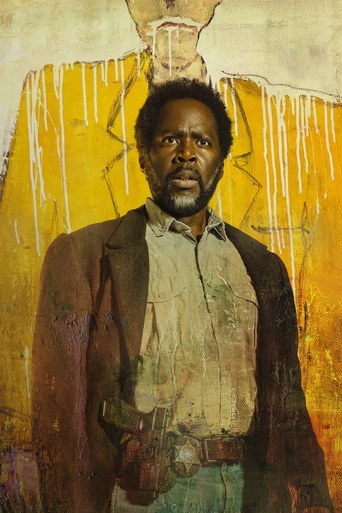
From · Season 4 · Episode 3 · 3 May 2026
S4E3 Merrily We Go
“Merrily We Go” turns cheer into compliance, using the season quest phrase as leverage rather than payoff.
THE MOMENT The Lake of Tears named in daylight for the first time, and the realization that the show planted those four words in its first two episodes, four years ago.
A new day doesn’t arrive like a promise. It arrives like a task. People move through the town with that familiar tightness, the kind that says every smile is a cover and every silence is a warning. Tonight, the horror doesn’t need to show its face right away. It waits, politely,
Full episode analysis below. Spoiler-light verdict above.
Updated
From S4E3: "Merrily We Go" Review
Spoiler-light verdict above. Full episode analysis below.
### COLD-OPEN A new day doesn’t arrive like a promise. It arrives like a task. People move through the town with that familiar tightness, the kind that says every smile is a cover and every silence is a warning. Tonight, the horror doesn’t need to show its face right away. It waits, politely, while the hour builds a small, ordinary-seeming chain of decisions that feel harmless until they do exactly what this place always does. BollyAI’s read: “Merrily We Go” treats cheer like a trap mechanism, then lets the trap spring on the most avoidable choice in the room.
The Lie in the Doorway
This hour’s central trick is simple: it forces characters to confuse “progress” with “escape.” That confusion is why the episode title lands. “Merrily We Go” sounds like a children’s refrain, like motion without fear. But in From, motion without fear is usually just the sound of a cage being dragged across the floor. The writing keeps returning to a specific kind of lie, the kind that wears the face of kindness.
The plot work for S04E03 leans into the show’s oldest lesson, that the town does not punish you for being weak. It punishes you for being certain. You can see that in how the episode structures its moral momentum. It lets its characters believe they are acting on information, but the information is always incomplete, and the incompleteness is the real predator. The episode is at its best when it refuses to frame the town as merely “dangerous” and instead frames it as interpretive. The monsters outside are only half the threat. The deeper threat is how the town turns perception into compliance.
BollyAI’s craft note: this episode’s dread is not built through jump scares. It is built through the show’s procedural rhythm. Characters are given small tasks, small permissions, small “surely this is fine” moments, and the camera stays patient long enough for the viewer to feel the moment certainty turns into surrender.
A Town That Rewards the Wrong Instinct
From has always worked like a test, but S04E03 makes the test feel older and more personal. The hour starts with a problem that looks solvable inside ordinary logic. Then it keeps narrowing the available answers until the town’s real preference becomes obvious: it wants you to choose fast.
That choice pressure matters, because it changes how you read every interaction. Jim and Tabitha-type characters in earlier seasons were often forced to function as investigators, people who could not stop asking “what does this mean?” Here, the episode leans into characters who are more tempted by certainty than investigation. It is not that they are careless. It is that the environment trains you to become a caretaker of your own fear. You stop thinking and start managing.
The episode’s writing also understands something crucial about horror pacing. If everything were equally scary, nothing would stick. So S04E03 makes the “less scary” moments do double duty. Conversations become cover for dread. Side quests become pressure valves that redirect tension toward a later consequence. And the forest threat sits in the periphery, less as a monster-of-the-week and more as a reminder that the town’s geography is part of the trap design, not just background texture.
BollyAI’s read is that this is the episode where the show sharpens its philosophy: the town does not need to chase you if it can make you walk the right way for it.
The Quest Phrase as a Hook, Not a Reward
The season’s central quest has been anchored, for a while, to that phrase from the early-series mythology, the one the show has been cultivating like a thread it can pull from any angle. By episode three, “Merrily We Go” treats that callback with care. It does not shove it into the episode as pure fan-service, and it does not use it as a shortcut to answers. Instead, it uses it as a hook for character behavior.
The phrase’s value in S04E03 is structural. The episode keeps asking what the town wants the characters to do with history. Does it want them to learn it? Or does it want them to obey it? That distinction becomes the emotional engine. Characters move through the episode as if the phrase is a clue, a key, a map. The show’s counter-move is that the phrase functions more like bait. It draws people toward an action that feels meaningful, then tests whether the action is actually wise.
This is where the episode’s title becomes more than tone. “Merrily” implies momentum without dread. The season’s quest implies meaning. The episode’s craftsmanship lies in forcing those to collide. The show is not interested in whether the characters are trying. It is interested in whether their trying is being directed by the place that cages them.
The Hour’s Real Monster: Compliance
The most chilling part of S04E03 is that it doesn’t require a large-scale supernatural reveal to land its point. It lands the point through consent. Through permission. Through the idea that the town can turn you into a willing participant in your own correction.
This is a show where smiles at night only need you to open the door. S04E03 echoes that mechanic in miniature. The “door” in this hour is not only literal. It is behavioral. It is the threshold between “I think” and “I do.” The episode makes that threshold feel thin. One conversation shifts the temperature. One decision becomes the precedent. One act of cooperation becomes something harder to reverse.
Even when the episode offers characters a way forward, BollyAI’s read is that it frames that forward movement as conditional. The show uses the town’s supernatural logic to punish not curiosity but compliance without suspicion. In a lesser script, the lesson would be blunt. Here, it’s dramatized: choices accumulate, and the episode lets the viewer feel that accumulation like weight.
BollyAI’s honest criticism: the episode occasionally leans on familiar beats of “the plan fails because the town is smarter,” and it risks smoothing out the surprise. The writing keeps you tense anyway because the character pressure is real. Still, when the hour repeats its own lesson a third time this season, the punch can dull slightly unless the final turn really earns it. The episode largely does earn it, but it has one or two transitions that feel like they want to hurry past the emotional cost.
The Verdict
“Merrily We Go” argues for a specific season-arc idea: the callback phrase is not just mythology, it is leverage. Episode three uses that leverage to tighten the show’s oldest horror contract. This town does not only trap bodies. It traps reasoning, then turns reasoning into routine. The hour’s strongest craft move is how it builds dread from permission, not threats, making compliance the true monster. Where it slips is in letting a few turns feel like they know the audience is waiting for the lesson, so the episode has moments of familiar momentum. But overall, the episode pays its debt: it makes the season quest feel earned, not advertised, and it reminds you that cheerfully walking forward is exactly how you end up opening the wrong door.