From · Season 4 · Episode 4 · 10 May 2026
S4E4 Of Myths and Monsters
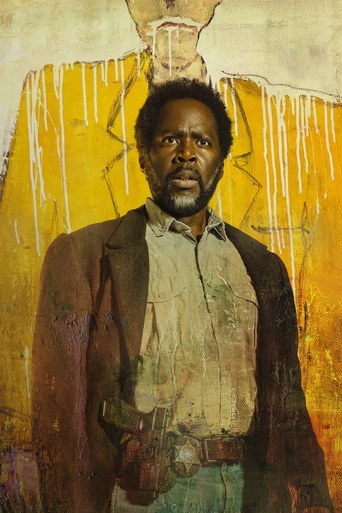
THE MOMENT Victor's collapse at the sight of the yellow suit. Whatever he knows about that figure, he has been carrying it since childhood.
A night creature picks up the rhythm of a human conversation and drops it into a voice that sounds almost kind. The hour does not start with a jump scare. It starts with permission. Someone, or something, is learning how to ask for the door like it owns the place, and the town ke
Full episode analysis below. Spoiler-light verdict above.
Updated
From S4E4: "Of Myths and Monsters" Review
Spoiler-light verdict above. Full episode analysis below.
### COLD-OPEN A night creature picks up the rhythm of a human conversation and drops it into a voice that sounds almost kind. The hour does not start with a jump scare. It starts with permission. Someone, or something, is learning how to ask for the door like it owns the place, and the town keeps answering with habits instead of choices.
### THESIS This hour makes the oldest threat feel newly personal by swapping the usual “run from monsters” energy for “solve the myth” logic, and then punishes the characters for treating folklore like safety.
The Door as a Negotiation Tactic
The show’s big supernatural gimmick is that the horror is procedural. It does not only hunt bodies. It recruits behavior. In "Of Myths and Monsters," the most important change is that the episode frames safety as a kind of paperwork. People aren’t just afraid of what comes out at night. They are afraid of what the night makes them believe.
That matters because the town’s defenses have always been half physical and half cognitive. You can lock a door, but you cannot lock the mind from being manipulated by a pattern. This hour leans hard into that pattern: the “thing” at the edge of town is not merely a predator. It is a storyteller. It borrows the shape of human speech and then tests whether the characters will treat that borrowed language as truth.
The title is doing work. “Of Myths and Monsters” suggests a world where monsters operate through myth, and myth operates through monsters. The hour turns that idea into a practical trap. Characters treat an old explanation as a map, but the episode treats it as a lure. The moment the show lets folklore function like information, it also exposes why the town keeps looping. A loop is not just time travel. A loop is a system of interpretations repeating, until something in you agrees.
Taboo Knowledge: Learning Without Becoming It
"From" has always liked knowledge that costs. You gain a clue and you pay for it with guilt, trauma, or a new fear that attaches itself to the clue. This episode continues that by putting characters in the position of “being correct” and still being wrong in the only way that counts.
Jade (and the show’s longtime fascination with pattern brains) is the clearest vessel for this. The hour’s myth-logic does not arrive like a magic revelation. It arrives like an argument, and arguments always sound reasonable before the consequences show up. If the episode can be accused of anything, it is that it sometimes lets explanation run a little long before the narrative snaps back into dread. But that is also the point. The show wants the comfort of sense-making to be part of the horror.
Boyd is the counterweight. He tends to turn crisis into structure. This hour challenges that reflex by implying that structure can become a cage when the town’s rules are designed to be “solved” rather than escaped. Boyd’s strength is leadership under pressure, and his weakness is the temptation to believe leadership can outsmart a system that feeds on compliance.
Ethan and Marielle (and whatever emotional duties the episode assigns them) keep the horror human. When the adults chase meaning, the kids expose what meaning is really doing: it is either protecting you or conditioning you. The episode threads that through its myth language without turning the characters into mouthpieces. It keeps the dread close to the body, not the thesis.
Who Believes First?
One of the best craft choices in this episode is how it distributes trust. Horror often turns on the moment someone decides not to listen. Here, the show turns on the moment someone decides to listen too closely.
The “smiling creatures” have always been about invitation. They do not need to physically overpower. They need you to emotionally consent. This hour takes that mechanism and tests it on belief. Characters do not just face danger. They face the burden of deciding what counts as evidence.
That is where the episode gets sharper than “monster of the week.” It asks a question that fits From’s seasonal mythology: when does observation become participation? If you interpret a voice as kindness, if you treat a symbol as instruction, if you repeat a “rule” without understanding who wrote it, you become the tool. The hour’s suspense comes from that slow pivot. The characters are not only trying to survive. They are trying to interpret without being exploited.
If there is a weakness, it is tonal pacing. At points, the episode spends time on myth framing that feels slightly more cerebral than the immediate fear stakes. But the story course corrects by forcing the consequences to arrive through character decisions rather than sudden violence. The fear is not random. It is earned, and it is avoidable in theory, which makes it uglier in execution.
Monsters as Literature: Rewriting the Town’s Rules
The best episode-specific craft move is how the show treats monsters like authors. They are not simply attacking. They are editing the town’s narrative so the town writes itself into the monster’s hands.
This is where the title lands. “Of Myths and Monsters” is about the overlap between story and predation. Myths are how communities explain fear. Monsters are how fear explains the community back. The episode uses that circularity to make the seasonal quest feel like more than a callback machine. It becomes a mirror.
The season has been building toward a central, almost childlike phrase that the story keeps orbiting. Even without resolving it, this hour makes the orbit feel active. It implies the phrase is not merely a clue. It is a key that changes how you hear the world.
That is also why this hour’s scariest moments are conversational. It is not the image of a creature. It is the image of a creature learning how you talk when you want answers. The show’s universe has always been hostile to certainty, and this episode weaponizes that hostility. Every time the characters try to pin the horror down with myth logic, the horror responds by turning the logic into a path.
The Verdict
"Of Myths and Monsters" is a strong mid-season pressure cooker because it treats folklore not as world-building flavor but as a behavioral trap. The episode’s central win is that it keeps the monster threat consistent while changing the method of attack. Instead of only chasing bodies, it chases meaning, and it punishes characters for using belief like a shield.
Scorecraft-wise, the episode is at its best when it trusts silence, hesitation, and choice over big scare energy. The main friction is that some myth setup stretches before the dread reasserts itself. Still, the hour earns its place by tightening the theme: the town does not trap you only with monsters. It traps you with the stories you use to survive.
VERDICT_JSON: {"score": null, "one_liner":"" }