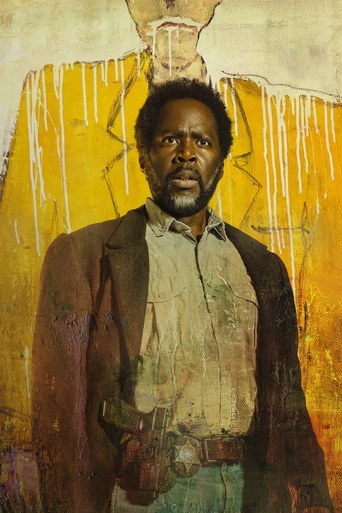
From · Season 4 · Episode 5 · 17 May 2026
S4E5 What a Long Strange Trip It's Been
S4E5 tightens the loop into a psychological weapon, punishing Marielle’s brightest instincts even as the season’s long debt starts paying back.
THE MOMENT Dolls in a lake, recovered from a memory that belongs to a previous life. The image the season has been circling, finally surfaced.
A line of vehicles sits half-buried in mud at the edge of the treeline, like the town has been swallowing travelers for years and still can’t decide what to do with them. The hour opens with **Marielle**, steadying herself as the forest gives her a route that looks familiar, then
Full episode analysis below. Spoiler-light verdict above.
Updated
From S4E5: "What a Long Strange Trip It's Been" Review
Spoiler-light verdict above. Full episode analysis below.
### COLD OPEN A line of vehicles sits half-buried in mud at the edge of the treeline, like the town has been swallowing travelers for years and still can’t decide what to do with them. The hour opens with Marielle, steadying herself as the forest gives her a route that looks familiar, then slides into something that feels rehearsed. It is not a rescue. It is a test. The episode immediately frames the problem the town loves most: you can move forward, yes, but the place you arrive at has already been waiting for you.
The Verdict: The Episode Treats Choice Like a Loop, Not a Promise
BollyAI’s read: this hour does not “solve” anything. It builds the season’s oldest debt by tightening the show’s core mechanic into a new shape. From has always trapped people with geography. This episode traps them with momentum. It makes the characters chase information the way you chase a turning key, and then punishes the chase with the specific kind of cruelty only a looping world can pull off. Where it works best is in its character work under pressure, especially Marielle, who keeps trying to treat the rules like they are negotiable. Where it slips is in how quickly the episode pivots from atmosphere to payoff, which slightly compresses the suspense it earns in the first half. The season-arc consequence is clear: the town is starting to answer the “long strange trip” question with receipts.
The Loop as a Character, Not a Location
This episode’s first big craft move is to treat the loop like an active presence. Not a map trick, not a lore riddle, but a force that changes how people think. Marielle is introduced and framed through motion: she tries to walk it off, tries to find a pattern, tries to make the world behave like a puzzle with a solvable center. The hour keeps feeding her routes that feel navigable, then makes the navigation itself become the trap. That is the point. The town is no longer only preventing escape. It is teaching the characters that “escape thinking” is part of the mechanism.
This is where S4E5 quietly aligns with the season’s central quest phrase from early-series mythology, the one that has been doing so much emotional labor this year. The episode behaves like someone finally paying back an old promise. It doesn’t just reference the idea. It dramatizes what that phrase implies: a long strange trip is not a journey with an endpoint. It is a cycle with a lesson plan.
And the writing understands something craft-wise that many horror thrillers forget. The scariest twist is not the reveal. It is the moment your protagonist realizes the rules are not neutral. The world has preferences. It steers you toward certain choices and away from others, and it does it with a calm that feels personal.
Marielle Learns the Hard Way That “Familiar” Can Be a Weapon
Marielle becomes the episode’s moral center, which is rare for a series that often keeps everyone in the same fog. She approaches the town with a belief that experience should clarify. She tests, she observes, she tries to convert fear into procedure. The problem is that the town has already converted procedure into fear. Every time she makes the sensible read, the world gives her a version of it that turns out to be a trap disguised as confirmation.
The episode’s strongest tension is internal. Marielle is not just fighting monsters or distance. She is fighting the temptation to “solve” the town by treating it like a machine. From has always had a supernatural logic, but this hour sharpens it: the machine is built to exploit your best instincts. If you chase the correct lead too eagerly, the hour uses that eagerness as the hook. If you slow down and try to be careful, the town uses that caution as a reason to feel “safe” just long enough to be wrong.
BollyAI’s honest critique: the episode sometimes compresses that slow-burn dread into sharper transitions than the atmosphere can fully support. You can feel the narrative pushing toward answers, and at times it overfeeds momentum. The result is that a few beats land slightly fast, as if the episode is eager to prove it has new information rather than giving the information time to curdle into terror. Still, even when the pacing runs hot, Marielle’s arc stays emotionally coherent, which keeps the hour from feeling like pure lore delivery.
The Forest’s Threat Becomes Procedural, Not Just Predatory
In From, the forest is not a single villain. It is a system. This episode leans into the idea that the forest operates with steps: separate you, redirect you, isolate you, then present you with the illusion of control. What changes in S4E5 is how “procedural” the danger feels. It stops being only about what might appear behind the trees and starts being about how the environment teaches you to doubt your own senses.
That is an important tonal escalation for season four. The show has flirted with rules before, but S4 has treated rules like bargaining chips. This episode keeps the bargaining theme alive by making the forest feel like it is playing chess with human attention. You do not lose because a monster is strong. You lose because you can be made to misread the meaning of being close, being right, being early.
Craft-wise, the episode uses repetition with intent. It offers familiar silhouettes and spatial echoes that almost tempt the viewer into pattern recognition. Then it denies you the clean payoff of that recognition. That denial is the point of horror. It keeps the brain working and never lets it rest. The town punishes resolution, and S4E5 respects that tradition.
A “Long Strange Trip” Is Really About Debt Payment
The title is doing its thematic work. “What a Long Strange Trip It’s Been” reads like a wink at nostalgia, but the episode treats nostalgia like a trap door. This is a season that keeps collecting on the show’s oldest debts, and S4E5 plays like one of those debt collectors who does not knock loudly, just silently moves things into place.
The central quest phrase carries the promise that the town has a memory, and the episode behaves as if that memory is being actively leveraged. It does not just imply that the past matters. It shows how the past is weaponized through structure. People keep circling back to moments they cannot fully explain, and the hour makes those moments feel less like coincidences and more like triggers. Something has been waiting for a long time, and the episode’s energy says the waiting is almost done.
But BollyAI’s read: the hour’s real win is that it does not treat the quest like an excuse to stop caring about people. It makes the quest personal through Marielle’s choices and through the cost of chasing answers. When the hour finally turns toward its payoff, the payoff feels like a continuation of the same lesson: the town’s cruelty is not random. It is directional. It pulls characters toward the next stage of whatever the season is building.
The Verdict
BollyAI’s read scores S4E5 as a craft-forward, theme-tight escalation that turns the show’s core mechanic into an emotional trap. The episode’s best move is how it makes “choice” feel like part of the loop. Marielle doesn’t just face danger. She faces the town’s ability to manipulate the meaning of her instincts. That makes the horror sharper than it needs to be, which is exactly the genre’s job.
The weak spot is pacing pressure. Some transitions toward payoff arrive a touch quickly compared to the dread the episode first cultivates. Still, the hour lands the season-arc consequence cleanly: it reinforces that the central quest phrase is not decoration. It is a long-form mechanism, and the show is finally paying it off in scenes that feel earned.