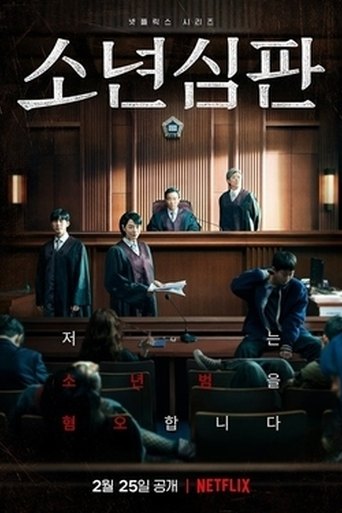
Juvenile Justice · Season 1 · Episode 2
S1E2 Episode 2
Episode 2 attacks Eun-seok’s contempt by proving that procedure can both follow rules and erase the truth, line by line.
A courtroom promise turns into a spreadsheet of excuses the moment the file hits the bench. Judge **Sim Eun-seok** walks in prepared to punish what she can see, but the case is built on what no one bothered to write down. A child’s damage is presented like evidence. An adult’s co
Full episode analysis below. Spoiler-light verdict above.
Updated
COLD OPEN
A courtroom promise turns into a spreadsheet of excuses the moment the file hits the bench. Judge Sim Eun-seok walks in prepared to punish what she can see, but the case is built on what no one bothered to write down. A child’s damage is presented like evidence. An adult’s convenience is presented like procedure. And when Eun-seok tries to force the story into something morally legible, the system pushes back with quiet paperwork and louder outcomes.
The Betrayal of Certainty
### This Hour Makes Eun-seok Do More Than Judge The series premise sets up Sim Eun-seok as a judge with a simple belief structure: juvenile offenders are culpable, and “softness” is a breeding ground for harm. Episode 2 doesn’t just test her compassion. It attacks the mechanics of her conviction. The writing uses early procedural friction to show that Eun-seok’s contempt is not only a moral stance, it is a method of survival. If she can label kids as wrong, she can ignore the uncomfortable question: why the world arranged the damage in the first place.
Beneath the legal language, Episode 2 frames judgment as a kind of consumption. Eun-seok consumes stories quickly. She reads intent into behavior, then tries to make the case match her temperament. The episode’s pressure comes when the file refuses to become a clean moral picture. The facts may exist, but they are distributed across institutions, delays, and reluctant testimony. The hour is at its best when it forces her to slow down without offering the catharsis of a “gotcha” villain.
### The System Treats Kids Like Evidence, Not People The episode leans hard into the institutional cruelty that sits beside every “neutral” process. Juvenile justice is supposed to be special, but Episode 2 reveals how easily it becomes a holding pattern for adults to avoid responsibility. The writing keeps returning to a familiar trap: the moment you want to help, the structure changes the definition of help. Help becomes documentation. Help becomes attendance. Help becomes a report nobody will read until it is too late.
That is why the hour feels emotionally sharp even when it is procedural. The show is not only saying “the system fails.” It is demonstrating a failure of attention. People around the case treat the child as a variable, not a human being. The court room becomes a place where harm is translated into categories that are easy to manage. And once harm is translated, it becomes easier to dismiss.
### Procedure Becomes a Weapon Against Truth Episode 2’s best craft move is how it makes procedure act like denial. Eun-seok arrives with impatience, but the show refuses to let impatience be the only engine. Instead, it shows how procedural steps can be used to protect the comfortable version of reality. Everyone can follow the rule and still miss the point. That is the show’s bleakest irony.
In this episode, the writing keeps the tension in the gaps. What gets delayed. What gets overlooked. What is “handled” off-screen. The court can demand answers, but it cannot compel the system to become honest. When Eun-seok pushes for clarity, the episode answers with friction that feels mundane: forms, schedules, jurisdictions, and the soft power of institutional inertia. The result is that the show makes courtroom drama feel less like a battle and more like a maze designed to tire you out.
### Where the Episode Hurts: It Overloads the Emotional Load Episode 2 also shows the series’ risk. When a script is determined to attack systemic failure, it can sometimes pile emotional emphasis onto beats that the plot itself has not yet fully earned. There are moments where Eun-seok’s frustration reads as understandable but slightly preloaded, like the episode is reminding you of its thesis rather than letting the case prove it through action.
The writing usually corrects itself by anchoring back into specific procedural choices. It reminds you that this is legal drama, not a sermon. Still, the hour occasionally flirts with the weight of its own intentions. The consequence is uneven momentum: some scenes land like evidence, while others land like thesis reiteration. The show remains compelling, but this is where the craftsmanship must work harder to keep the argument from sounding pre-decided.
### Human Complexity Slips Past the Courtroom Script The series is at its strongest when it shows characters who cannot be reduced to the role the law assigns them. Episode 2 expands the human ecosystem around Eun-seok’s work. Instead of creating a binary between “good judge” and “bad system,” the hour populates the system with people who have incentives, fears, and personal histories. The episode suggests that cruelty is often distributed, not authored. That is what makes Eun-seok’s certainty collapse feel earned rather than sentimental.
This is also where the episode’s emotional realism lives. Juvenile cases are never only about the juvenile. They are about family collapse, institutional limits, and the way adults outsource pain until it lands on someone else’s desk. The show’s genius is that it keeps the focus on the child without letting the adults off the hook. Episode 2 does not ask viewers to pity the system. It asks them to watch it function.
The Verdict
Episode 2 is where Juvenile Justice turns its premise into method. It takes Judge Sim Eun-seok’s contempt and shows how easily it becomes a shortcut when the facts are complicated, delayed, and institutionally blurred. The episode argues that justice cannot be purely personal because the system converts people into paperwork. It offers no clean villain, only a set of incentives that make truth expensive.
As the season arc tightens, this hour plants a core trajectory: Eun-seok will not simply learn empathy. She will learn the cost of expecting clarity from institutions built to avoid it. The collapse of certainty is the point, and Episode 2 makes that collapse feel procedural, not poetic.