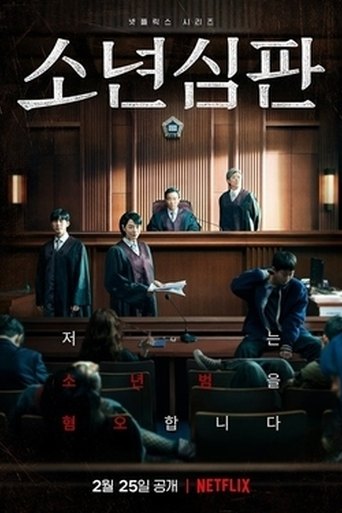
Juvenile Justice · Season 1 · Episode 4
S1E4 Episode 4
S01E4 turns courtroom procedure into a moral trap, showing how “complete” files become manufactured truths.
A kid sits in court like everyone else, but the atmosphere is different, heavier. Judge **Sim Eun-seok** watches not just the testimony, but the posture of the room: the delays, the paperwork, the way adults talk around what actually happened. The episode opens with a procedural
Full episode analysis below. Spoiler-light verdict above.
Updated
Cold open
A kid sits in court like everyone else, but the atmosphere is different, heavier. Judge Sim Eun-seok watches not just the testimony, but the posture of the room: the delays, the paperwork, the way adults talk around what actually happened. The episode opens with a procedural problem that is also a moral one. The case file is “complete,” yet the truth keeps slipping out through gaps that no one wants to admit they caused. BollyAI’s read: the hour weaponizes procedure to expose how easily certainty becomes cruelty.
Verdict-first thesis
S01E4 uses a small procedural knot to prove the show’s larger point: the system does not just fail juveniles. It actively manufactures “good enough” narratives that let adults stop looking.
## Where the paperwork feels like a lie
Judge Sim Eun-seok does not arrive as a polite observer. She arrives as a hammer with a syllabus. In earlier episodes, her contempt plays like a stance, even when it is wrong: she assumes she can out-argue the mess. This hour tests that reflex by giving her something legally tidy and emotionally rotten. The case moves because the system knows how to move cases. It knows forms, deadlines, and phrasing. It also knows how to turn missing context into a technicality.
What S01E4 does well is make the “wrongness” specific. The show does not need melodrama to make the point. It shows how testimony gets compressed into court-ready sentences. It shows how the people who should investigate are instead managing risk. And it shows how quickly everyone’s language shifts from “what happened” to “what can we prove.” Judge Sim is forced to confront an uncomfortable fact: procedure can be accurate and still be unjust. BollyAI’s read: this is the episode where the show stops asking whether Eun-seok can learn empathy and starts asking whether the court is built to prevent empathy from doing any work.
There is a hard edge here, and it lands because the writing keeps returning to the same contradiction: the court is supposed to protect children, yet it functions like a machine that sorts them into manageable stories.
## The judge’s certainty starts to cost something
The emotional pivot for Sim Eun-seok is not a sudden softening. It is an erosion. She keeps trying to enforce fairness through her own standards, and the episode keeps demonstrating how those standards collide with institutional inertia. The hour puts her in the position of having to choose between “the way cases are processed” and “the way truth should be searched.” That choice is not theoretical. It shows up in how questions are answered, how evidence is framed, and how deadlines close.
S01E4 makes this clash uncomfortable by having Eun-seok’s strength become the very tool the system can deflect with. When she argues for rigor, she is told the process is already followed. When she pushes for nuance, she is met with the same bureaucratic wall: there is a file, therefore there is closure. BollyAI’s read: the writing is clever because it does not just undermine her. It also tempts her. She can still feel like the competent one. She can still believe she can “fix” an individual case through intensity. But the episode demonstrates that intensity without systemic change is just another form of damage.
This is where the show’s tone sharpens. Eun-seok’s contempt was always partially performance, but now the performance is threatened. If she cannot win with logic, then what is she left with? The episode answers: responsibility, but not the kind that feels heroic. The kind that is exhausting because it is endless.
## The case is small, the consequences are not
S01E4’s crime is not the story’s real engine. The story’s engine is the chain of people who treat a juvenile case like a workflow. The episode lingers on the social machinery around the child: adults who might be protecting themselves more than the child, officials who might be afraid of being blamed, and legal actors who treat delay as normal. This is legal drama as sociology, and it never pretends sociology is abstract.
Even when the episode focuses on one case, it keeps zooming out in theme. The juvenile is not simply “a defendant.” They are a node in a network of reporting, interpretation, and institutional habits. The episode makes a clean point through its structure: if the adults rely on shortcuts, the child will inherit the shortcuts as fate.
BollyAI’s read: the show’s most devastating move is refusing to let the courtroom be the whole world. The court is where truth should be weighed, but the episode repeatedly shows that truth is already shaped long before the judge speaks. That means rulings are not just decisions. They are outcomes of earlier administrative choices. S01E4 leans into that moral math, and it is why the hour feels heavier than its runtime.
## A courtroom scene that refuses to feel neutral
The writing in S01E4 understands that legal scenes can’t just be staged arguments. They have to feel like the air itself changes when someone with power asks the wrong question. The episode builds courtroom tension through micro-friction: phrasing that softens harm, testimony that evades accountability, and responses that sound “reasonable” because they are carefully constructed to survive scrutiny.
Judge Sim Eun-seok is especially good as the lens here. The show lets her anger surface, but it also makes her anger productive only when it becomes investigatory rather than punitive. When she stops treating the juvenile as a moral failing and starts treating the case as an evidence problem, the hour finds its emotional truth. BollyAI’s read: the episode’s best writing doesn’t ask for sympathy. It asks for competence, and it shows that competence without empathy is still dangerous.
The episode’s criticism is sharpest when it shows how “neutral” courtroom language becomes a kind of violence. Not by insulting the child. By smoothing the rough parts of reality until they stop bleeding.
## The moral win is delayed on purpose
S01E4 does not give a clean catharsis where Eun-seok wins the case and becomes enlightened. Instead, the episode chooses realism: people do not change because one hour of good intentions happened. They change because they are forced to see what they were ignoring, and then forced again. That design fits the season’s broader arc: Eun-seok’s certainty is the initial engine of conflict, and the system’s confidence is the opposing engine. S01E4 tilts that balance, but it does not resolve it.
If there is an emotional “cost,” it comes from how the show treats learning as humiliation. Eun-seok has to look at her own assumptions and find them inadequate. But she also has to look at the adults around the system and see how little they care about learning at all. BollyAI’s read: this is the episode where the series stops promising personal redemption and starts promising a battle with process.
The Verdict
S01E4 is a disciplined legal-sociology hour that uses procedure as a spotlight, not a shield. The episode argues that injustice survives not through obvious villainy, but through administrative confidence. Judge Sim Eun-seok keeps reaching for clarity, and the writing keeps showing her that clarity can be manufactured when the system benefits from it. Where the hour lands hardest is in the way it delays emotional payoff to mirror institutional delay. It is not just that juveniles suffer. It is that the court structure can convert suffering into paperwork, and then call the paperwork “truth.” Season-arc note: this episode deepens Eun-seok’s dismantling arc by turning her courtroom authority into a diagnostic tool, forcing her certainty to confront systemic inertia rather than just individual cruelty.